
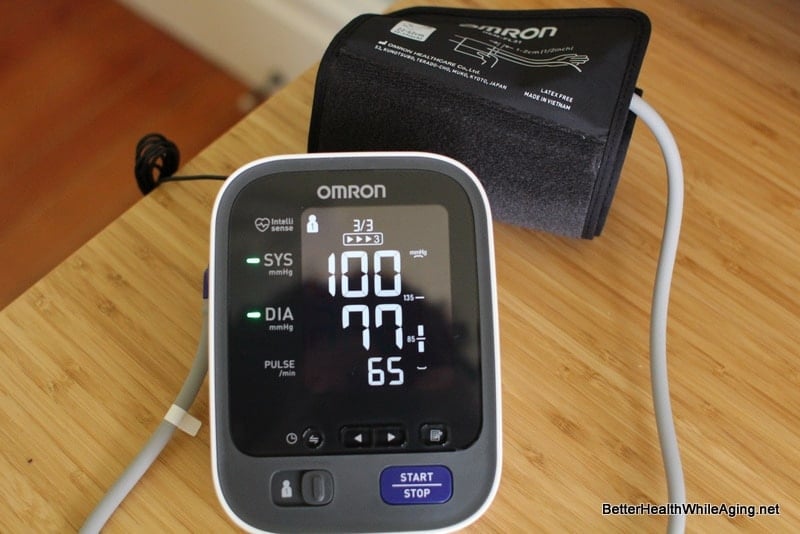
Have you been concerned about high blood pressure (hypertension)? Or are you worried about an older relative having a stroke or heart attacks?
You’re not alone. After all, hypertension is the most common chronic condition among older adults, and medications for blood pressure (BP) are among the most commonly taken drugs in the US.
Even more important: poorly controlled hypertension is a major contributor to the most common causes of death and disability in older adults: strokes, heart attacks, and heart failure.
So it’s certainly sensible for older adults – and for those helping aging parents – to think about lowering blood pressure.
And once you start thinking about high blood pressure, you’ll probably start to wonder.
Are the blood pressure medications you’re taking enough? Is your blood pressure at the “right” level or should you and your doctors work on changing things?
And what about that major research – the SPRINT trial — that made the news in 2015? (In this study, older adults randomized to aim for a lower BP did better than those who got “standard” BP treatment.)
These are excellent questions to ask, so I’d like to help you answer them.
Now, I can’t provide exact answers on the Internet. But what I can do is provide a sensible process that will help you successfully address these questions about lowering blood pressure.
In this article, I’ll share with you the process that I use to:
- Assess an older person’s blood pressure management plan, and
- Determine whether we should attempt changes.
If you’re an older adult, you can use this approach to get started assessing your own BP management plan. This will help you to better work with your doctors on assessing and managing your blood pressure.
If you are helping an older relative manage health, you can follow these steps on behalf of your relative.
But first, let’s review a few blood pressure fundamentals, namely:
- Key terms related to blood pressure
- What’s considered normal blood pressure by age
- How to measure blood pressure (very important!)
Key terms about blood pressure and hypertension
- Systolic blood pressure (SBP): the “top number” when BP is checked. This reflects the pressure in the arteries when the heart squeezes. It’s by far the most important number to consider when it comes to older adults.
- Diastolic blood pressure (DBP): the “lower number” when BP is checked. This reflects the pressure in the arteries when the heart relaxes.
- Pulse: the heart rate. Automatic BP monitors report pulse along with BP. Doctors must evaluate a person’s heart rate when considering a change in BP medication.
- Hypertension (also known as “high blood pressure”): Usually defined as SBP> 130 and/or DBP > 80. If only the systolic BP is high, this is called “isolated systolic hypertension.” This type of hypertension is very common in older adults, as aging is associated with both increases in systolic BP and decreases in diastolic BP.
What is considered normal blood pressure in older adults?
As of 2017, the American College of Cardiology and the American Heart Association (ACC/AHA) are defining normal blood pressure and high blood pressure using the same ranges for all adults, regardless of age or gender.
Here is the definition of normal blood pressure (and hypertension) per the ACC/AHA:
| BP CATEGORY | SYSTOLIC BP | DIASTOLIC BP | |
|---|---|---|---|
| Normal | <120 mm Hg | and | <80 mm Hg |
| Elevated | 120–129 mm Hg | and | <80 mm Hg |
| Hypertension | |||
| Stage 1 | 130–139 mm Hg | or | 80–89 mm Hg |
| Stage 2 | ≥140 mm Hg | or | ≥90 mm Hg |
In short, if you are wondering what is “normal” blood pressure by age: whether a person is in their 60s, 70s, 80s, or 90s, normal blood pressure is considered to be a BP less than 120/80.
Furthermore, the definition of normal blood pressure does not vary between men and women.
(For more on BP guidelines, see my article What the Blood Pressure Guidelines — & Research — Mean For Older Adults.)
How to measure blood pressure
As you can imagine, a key component of optimizing BP management is to measure an older person’s BP and pulse.
Measuring BP allows us to:
- Diagnose people with hypertension,
- Determine how severe it is (which helps us all decide how important it is to intervene),
- Evaluate how well people are responding to a treatment plan, whether that plan involves lifestyle changes or medication or both.
Measuring BP to get blood pressure readings usually sounds straightforward.
People assume it’s just a matter of finding out what the BP was at the doctor’s office, or getting a reading from a home monitor, or maybe even a reading from a health fair or drugstore.
But in fact, research has shown that a single office-based BP reading often does not represent a person’s usual BP. One study even found that the “usual” way of measuring BP misdiagnosed 24-32% of volunteers!
This is because people are often anxious when at the doctor’s office, which can temporarily raise BP. Studies estimate this “white-coat hypertension” affects 10-20% of people.
Furthermore, BP is constantly changing a bit, moment to moment. So experts agree that it’s much better to obtain several readings and average them, in order to properly assess a person’s usual BP.
For instance, in the ground-breaking SPRINT trial of intensive BP lowering in older adults, the researchers checked BP by having participants first rest quietly in a room for five minutes. Then an automatic monitor checked BP three times in a row, with a one-minute interval between each check. The average of these three readings was then used to assess BP and make changes to hypertension medications, if necessary.
As you can imagine, this is not the way most people’s blood pressure is measured by their doctors.
So what’s better?
Currently, the “gold standard” for evaluating blood pressure is called “ambulatory blood pressure monitoring” (ABPM). It involves wearing a special monitor that checks BP every 15-60 minutes over 24 hours. The doctors then receive a report showing the average daytime BP and average nighttime BP.
Such monitoring provides excellent information for patients and doctors. In fact, research shows that ABPM is a better predictor of future cardiovascular events (e.g. heart attacks, strokes) than conventional office-based BP measurements are. However, ABPM is not yet widely available, since it requires special equipment and may not be covered by insurance.
So what is considered next best? Research shows that home blood pressure measurements are better than “usual-care” office BP measurements. Meaning, home BP measurements correlate better to the BP that is measured if one uses the fancy 24-hour ambulatory monitoring approach.
Based on these facts, in 2008 the American Heart Association, American Society of Hypertension, and Preventive Cardiovascular Nurses Association issued a joint scientific statement calling for home BP measurements to become a routine component of BP measurement in people with known or suspected hypertension.
They also suggested that clinicians review a week’s worth of home BP readings before making a clinical decision or changing a person’s medications.
(You can read the American Heart Association’s 2019 guidelines on measuring blood pressure at home here, in section 4. You can also learn more about home BP monitoring here: Home Blood Pressure Monitoring: Current Status and New Developments.)
Now that I’ve made the case for checking BP carefully at home, let me share the six-step process you can use to assess your blood pressure management plan.
6 steps to better high blood pressure treatment in aging
1.Obtain a high-quality home blood pressure monitor.
Why: Studies have found that home-based measurements are better than office-based BP measurements. They better reflect a person’s BP over 24 hours.
Notes: See “Choosing & Using a Home Blood Pressure Monitor” for more details on choosing a monitor. Be sure to get one that measures BP at the upper arm (those wrist ones are not accurate enough!). Ask your doctor for help validating that your home monitor is getting accurate readings.
2. Check blood pressure twice a day, every day for one week.
Why: Since blood pressure is constantly changing a bit — or sometimes a lot — in the body, checking several days in a row means that you’ll have several readings that can be averaged.
Aim to check at the same times every day. An average of several daily readings provides a more accurate picture of a person’s BP.
Checking in the morning and evening is recommended by many experts. This is because BP can vary during the day, especially in people who are taking BP medications. But if checking twice a day seems too hard, just check once a day.
Experts also often say to check BP in the morning before any medications are taken. However, if there have been any concerns about falls, I like to review readings taken about an hour after medication. This is because I want to make sure the BP isn’t falling too low when a person takes their medication.
Optional but helpful: Use a “three measurements in a row” technique if possible. The SPRINT trial measured BP by letting participants rest quietly for five minutes, and then having the monitor check the BP three times in a row, with a one-minute pause between each check. Those three readings were then averaged into a reading for the day.
Some home blood pressure monitors have a feature that makes this easy to do.
3. Make an up-to-date list of all current medications.
Why: Your doctors will need to know exactly what medications you are taking, in order to evaluate your blood pressure treatment plan.
Notes:
- Start by listing those for heart or BP.
- But list all others, because some medications that are not prescribed for BP can still affect BP (such as Flomax, which can be used to improve urination when a man has an enlarged prostate).
- Also list all supplements, vitamins, herbs, and over-the-counter medications.
- Be sure to note if any medication is not being taken exactly as prescribed. It’s especially important for the doctors to know if an older person has been skipping any of the medications that affect BP.
- Note any concerns about side-effects, cost, or other concerns related to continuing the medication.
4. List the lifestyle approaches to lowering BP that you are following (or interested in).
Why: Although prescription medications are the main way doctors often try to treat hypertension, many lifestyle changes have been shown to help lower BP as well.
You’ll want to let your doctor know which of these you are using. Also, let your doctor know if you’d be interested in incorporating any of these into your BP management plan.
Many of these lifestyle changes are great for older adults, because they benefit health in many ways but have fewer risks than taking prescription medication.
Note: Proven approaches to lower high blood pressure include:
- Weight loss
- Exercise
- The DASH (Dietary Approaches to Stop Hypertension) diet
- Reducing sodium (salt) intake, especially in people who seem to be salt-sensitive
- Not smoking
- Meditation
I talk about these more in detail in my Youtube video here:
5. Make an appointment to discuss blood pressure management with your usual doctor.
Why: Your doctor can help you identify a good target blood pressure goal, and can help you develop a plan to reach that goal. Be sure to bring up any concerns regarding falls, or other potential side-effects of treatment.
Notes:
- Bring in your home BP readings and your up-to-date medication list.
- Consider asking the doctor to check BP sitting and standing, especially if you’ve had any concerns about falls
- Ask your doctor what target BP goal they recommend for you, given your health history.
- Research indicates that the biggest benefit is in getting systolic BP down to the 140s. A systolic BP target goal of <150 is a good starting place for most frail older adults. This goal used to be recommended by major guidelines in 2013 and in 2017. More recent blood pressure guidelines recommend getting to <140.
- Results from SPRINT suggest that if you’re similar to the SPRINT participants, you may experience additional benefits by aiming for a systolic BP close to 120. If you’re considering this, be sure to read my article explaining SPRINT and related research, so that you’ll have a clear understanding of how likely you are to benefit (at best, an estimated 1 in 27 chance based on the research) and what are the risks and burdens.
- I personally generally aim for a systolic BP of 140-150 for frail older patients, and 130-135 for less frail older adults. If we get to a SBP of 130, then we consider whether to aim for an even lower BP, depending on the older person’s health and willingness to try more intensive BP treatment.
- Ask your doctor about taking most (or maybe even all) of your BP medications at night.
- A randomized trial published in 2019 found that taking BP medications at bedtime (rather than in the morning) resulted in lower ambulatory blood pressure readings and fewer cardiovascular events!
- Taking BP medications at night is likely to be a simple way to help them be more effective. For more on taking blood pressure medication at night, see this Harvard Heart Letter: Is nighttime the right time for blood pressure drugs?
6. Plan to follow up to see how your BP plan is working, and to make adjustments if needed.
Why: Whatever you and your doctors decide to do, you’ll want to make a plan for seeing how your blood pressure responds to the changes.
Note: Remember that experts say a week’s worth of home BP monitoring is more accurate than a follow-up BP check in the office.
Be sure to ask your doctor to specify:
- When should you undertake this home monitoring? (Most BP medications will take their full effect within 1 week. Lifestyle changes will take weeks to months to have an effect.)
- When will you be meeting — by phone or in-person — to discuss the results of the follow-up BP monitoring?
- What level of high (or low) BP should trigger a call to the office?
Also, be sure to let your doctor know if you’ve been having any symptoms that might be related to low blood pressure, such as light-headedness or dizziness when you stand up. Especially if your sitting systolic BP is less than 120, or if your BP drops when you stand up, you might be taking more blood pressure medication than is needed.
And that’s it!
Make the effort
Now, this approach is more work than usual. It takes a little more time and effort than just going to your doctor and having them check your blood pressure.
But the benefits make this time well spent. Think about it.
You and your doctor get a more accurate picture of what is going on inside your body.
You get to help create a blood pressure management plan that is just right for you.
You may even help prevent some serious health problems. Like a heart attack or stroke, or a serious fall due to incorrect medication.
No one likes the thought of letting a chronic condition get dangerously out of control. And no one likes to take more medication than they need to.
You can help keep this from happening.
Just follow this process for assessing a blood pressure management plan, and you’ll be on your way to confirming that you’re following a blood pressure management plan that’s right for you, or for your older parent.
This article was last reviewed in September 2025.


Rai Batra says
Dear Dr. kirnisan,
I am an active 79 years old male of very slight build and weigh about 100 lbs.Till age 71,I ran and walked 40- 50 miles per week.
About 4 years ago ,my doctor told me that he was concerned with systolic blood
pressure which was averaging 157 in doctors office.I bought Amron blood pressure monitor and check my readings in the morning within 30 minutes of getting up at 4.45 a.m. and the I go for my walk and run or just walk and weight training 5 days a week. My home readings average about 115/67 with heart rate averaging 55.Pl. note that I have been on Amlodopine 2.5 mg. taking it about an hour before going to bed.I also take Flowmax and Avodart for enlarged prostate.
I am a light sleeper.
Recently, I started checking my blood pressure at about 5.0 p.m at home the readings can average as high as 142/67 with heart rate of about 58.
At my annual exam in late July, my blood pressure was again 157/65/54 as checked by doctor with 6 consecutive readings and on my own BPmonitor. My doctor reviewed about 100 readings on home BP monitor and came to the conclusion that he was not concerned.
I am known to be somewhat of an anxious person and somewhat high strung.Recently, I have started meditation with the hope of calming my mind.
I would appreciate your comments and any recommendations about bringing my BP to normal level in the evening as well.
Pl. note that I am a terrible typist and thus make spelling errors.
Thank you. Look forward to your response.
Sincerely,
Rai Batra
Leslie Kernisan, MD MPH says
Congratulations on being proactive about your health.
Well, it is common for people’s BP to be higher in the office, but if it’s higher in the evenings at well, you could certainly discuss changing your BP management with your doctor. I would recommend that you discuss further with your doctor. Specifically, you may want to ask your doctor why your BP seems to be higher in the evening, and what your goal should be for your home BP readings. You could also try changing the time of day you take your amlodipine, to see if that changes your daily BP pattern.
If you are in good health and prefer to minimize your cardiovascular risk, it could be reasonable to aim for a lower BP goal, such as that in the SPRINT study. I would just encourage caution about bringing that morning reading down further. You could discuss whether diet or other lifestyle changes might help you bring down BP, and then you could also talk to your doctor about adjusting your BP medications.
I am glad you are trying to address anxiety and being wound up. It certainly might help bring down your blood pressure, esp if you learn exercises related to deep breathing and other ways of inducing the body to physiologically relax. good luck!
Lyn S. says
I am a 55 year old woman who was diagnosed with hbp about 5 years ago. I also have degenerative arthritis in my hips, in particular,and have had to keep up with strength training exercises over the past 20 years to ward off the pain. When first diagnosed with hpb, my doctor put me on Benicar. It helped immediately but I also began to experience some severe muscle and joint pain in my hips and legs. She switched me to Valsartan and the pain abided for about 2 months. Then came back again. Fast forward to last fall when I had a left hip replacement. Recovery was slow, especially for my age. I kept stumping the PT as to why my muscle tension was so tight. Finally, after I started working out at the gym, my pain resided. Counter intuitive, I know. Now I am scheduled to have a right hip replacement in November 2018 and am experiencing intermittent excruciating pain in my quads and tibia. I’ve been reading about an uncommon side effect of bp meds being muscle and joint pain. I’m wondering how much the bp meds are contributing to my pain. Would it be unreasonable to try switching bp meds every 3/4 months? Thank you for any advice you can provide.
Leslie Kernisan, MD MPH says
Well, it sounds like you started with one BP med in the angiotensin II receptor blocker (ARB) class, and then your doctor switched you to another drug in that same class. These drugs do affect potassium, which can affect muscle function but otherwise, I haven’t heard of them being particularly associated with joint pain, and I didn’t see much mention of this when I looked just now in my clinical reference (Uptodate.com).
There are several other classes of BP med you could try. If you think you are having side-effects from your ARB, then it might make sense to try a different class, such as a calcium channel blocker. (You could also try a thiazide diuretic, but that would be more likely to affect blood electrolytes.)
I would not recommend changing BP medications every 3-4 months just to prevent the onset of potential side-effects, but it certainly makes sense to reassess how you are doing on a BP med after a certain interval (usually after a few weeks, and then every few months or more often if the dose still needs to be refined or if there is concern about potential side-effects).
Re your pain, I’m not surprised that PT or exercise helped! They often do help if one is able to get there, gets a good therapist, and is able to stick with the exercises (no small feat when one is hurting in the first place). good luck!
Bill Ford says
Speaking of BP meds that effect potassium, my potassium is usually around 3.3 which is below the threshold. My doctor thinks this is due to the diuretic chlorthalidone and recommends a supplement like KLOR. I also take lisinopril and amlodipine. I have no symptoms of hypoglycemia and have put off taking the supplement. Perhaps switching to a potassium sparing diuretic would be the way to go, but I tolerate my current meds very well. I am a very active 75 year old man. Thank you so much for your good work with this blog.
Leslie Kernisan, MD MPH says
Thank you for your feedback, I’m very glad if you find this site useful.
Hypoglycemia refers to low blood sugar, not low potassium. I am guessing that you meant to write you have no symptoms of hypokalemia (low potassium)?
In general, symptoms are uncommon when the potassium level is over 3.0. However, some observational studies, such as this one, have found that mild hypokalemia is associated with an increased risk of poor health outcomes.
The main thing that strikes me about your comment is that you are taking three different BP medications. This is necessary for some people, but in other cases, with a little tinkering we are able to provide adequate control with just two medications. The combination of an ACE inhibitor (such as lisinopril) and a calcium channel blocker (such as amlodipine) was shown to be particularly favorable in the ACCOMPLISH trial, so this combination is now recommended by many experts.
So, you may want to discuss your BP medications further with your doctor. In particular, you may want to discuss the potential risks of mild hypokalemia, and you may also want to ask whether it might be possible for you to manage your BP adequately with two medications instead of three. Good luck!
Kathy says
I just found this site while reading the Washington Post article, and I so hope there is some help for me. I will be 71 in a couple of weeks. I am a congenital heart survivor, having surgical repair by Dr. Cooley in 1960 at the age of 12. I learned a few years ago that I have a “showering” of micro hemorrhages in my brain from the heart lung machine not being “neuroprotective”… That news was shocking and traumatizing. As a child I expected to die. Both my young brothers died of other congenital illnesses. At any rate that apparently puts me at higher than normal stroke risk.
Some years ago I was put on medication for elevated blood pressure, as my mother before me. I took my medication and checked my values “religiously”… All of a sudden last October I developed malignant hypertension. I was hospitalized 3 times in 3 days with values over 220, then the hospital sent me to a nephrologist. He started running tests which were all normal. The hospital put me on Clonidine but the nephrologist did not add anything while running tests. In November I had to be hospitalized again. That time the ER doctor said they were not going to release me back to the same situation and added Amlodipine Besylate. My blood pressure has been normal with one brief spike since. Problem now are medication side effects: edema of feet and legs, hearing loss from fluid retention, bloating and constipation and generally not feeling well. I had always worked full time but finally retired this March. I am very disappointed to think that after working so hard for so may years I am going to feel like this in retirement due to side effects. I have talked to my nephrologist, especially a few weeks ago when I developed hearing loss from fluid retention and found that all the side effects are cumulative. He sent me an email saying we will stop the Clonidine and Amlodipine with no adjustments or anything in their place!! My pharmacist has tried to be helpful but can’t change anything. He says Amlodipine is one of the worst meds for side effects and many patients have to stop it for something else. The nephrologist does not seem to have done any research on side effects in order to suggest alternative medications, or to offer adjustments. He seems kind and listens, but offers nothing. In fact all of my medications for this condition were prescribed at the hospital. We have few geriatric doctors in this area, and no geriatric cardiologists. My regular cardiologist who just prescribed my standard meds cancelled my appointment when I developed the spikes. I already knew he was not up to challenges…I see an adult congenital cardiologist every so often even though he tells me I don’t need him as my congenital repair and heart are fine. There are not a lot of nephrologists here, but I think there is a better one in the same group so I doubt he will see me. I am really in a dilemma because I certainly cannot risk spikes, but would hope to feel better and not risk side effects such as fluid retention causing worse problems. It has also elevated my blood glucose which I watch and control through diet and exercise. The medication had my blood pressure running as low as the low 80s over low 50s, obviously too low, which is when the edema developed and I was lethargic. Now values are good. I have found little information on malignant hypertension and had never heard of it. I will greatly appreciate any suggestions. Thank you! PS I do not have a primary care doctor because so many here will not take Medicare and the “good” ones are not taking new patients or retiring. I have been looking for some time. My neurologist even had me send records to his good friend, an internal medicine specialist and they called and said he couldn’t help me….I had endocarditis at age 5 and have some medical PTSD. Sorry to write a novel, but I am thrilled there may be some help for me!
Leslie Kernisan, MD MPH says
Sorry to hear of all your challenges related to blood pressure. Your situation sounds particularly complicated and so it’s probably appropriate for you to be seeing a specialist. High blood pressure can be treated by either cardiology or nephrology; nephrology might be better if you are also experiencing edema, but it also depends on what they think caused your hypertensive emergency in the first place and whether you seem to have anything going on with your kidneys.
Edema is a known side-effect of certain calcium channel blockers; doesn’t affect everyone but certainly can be an issue, especially with higher doses of this type of BP medication.
I took a brief look in the medical literature, and apparently combining a calcium channel blocker with an ACE (angiotensin-converting enzyme) inhibitor BP medication can improve edema:
Effect of renin-angiotensin system blockade on calcium channel blocker-associated peripheral edema
You may want to ask your nephrologist if that might be an option for you to try. You could also consider asking more questions about what they think may have caused your hypertensive emergency in the first place.
There are many different classes of BP meds that they could try, but it’s impossible for me to say which would be appropriate to try next for your particular situation.
If you are dissatisfied with your current nephrologist, you need to either persistently and politely keep asking for more help and more of what you need (e.g. more explanations), or you need to try a different nephrologist. I’m sorry as doing this is a lot of work, but unfortunately, it does sound like you need to work closely with a health professional.
You could also try looking for an online community of people with similar health problems, as this can be a good source of moral support. Good luck!
Kathy says
Dear Dr. Kernisan, you don’t know how thrilled I am to hear back from you!! There seems to be so little kindness these days that I so appreciate your caring response. I have had little success finding information about malignant hypertension. You mentioned following up was a lot of work, but it has been so consuming for me due to my fear, but also trying for a decent quality of life with as few side effects as possible, that my daughter says I need to find something else to do. (I have no other family left)…Besides a very stressful job, and caregiving for my mother who lived to be 97, I have always done volunteer work, so am really ready to get back to being productive…As far as my malignant spikes, I have asked every doctor and no one has an answer as to why it suddenly developed. That is one reason it is so scary. The nephrologist says he guesses it was from years of chronic stress. All the tests (kidney and carotid artery) were negative. I do a ton of research and am so glad to have found your site!! I found you through a link in a Washington Post article by Janice Neumann on August 17 “New Blood Pressure Guidelines Can Cause Problems for the Elderly”… I did not find a way to contact her. I have had no luck finding similar patients but need to learn social media skills. Thank you again so much!!!! I will be a faithful follower from now on!!! Best Regards, Kathy
Leslie Kernisan, MD MPH says
Glad to be helpful. If the nephrologist says all the tests were negative, that sounds reassuring and might mean your doctors could try different types of BP medication with you. Generally, three types of medication are considered equally acceptable for first-line treatment of high blood pressure: thiazide-type diuretics, ACE inhibitors or angiotensin receptor blockers (these two are related), or calcium channel blockers such as amlodipine.
Honestly I find that the best information is on Uptodate.com, there is a topic on treating high blood pressure in older adults. It’s written for professionals but summarizes all the important info, you can subscribe for 7 days for $20.
If stress is an issue for you, you might want to consider working on relaxation therapies, mindfulness, and other non-drug methods to reduce stress.
To find others online with similar health concerns, you could try SmartPatients or PatientsLikeMe.
Good luck and thank you for joining our community!
Yash sharma says
My grandfather age 75 has an esophageal stricture and from this stricture he started getting high bp…..
I have noticed that whenever his food does not go in or does vomiting while eating food his BP rises from normal….
Now his Bp is 170/80
What can I do…. Pls help……
Regrads
Nicole Didyk, MD says
Blood pressure can become elevated when a person is under a physical or emotional stress, like anxiety, pain or vomiting. When blood pressure is consistently high, that’s the time for someone to see their doctor to discuss a diagnosis and treatment of hypertension.
Myrle Bowe says
I have been doing a search to find information I can trust about my high BP, and I am so glad I found you! Your information and links to more have answered my questions, hardly addressed by my doctors and pharmacists. I am an 87-year-old female in generally excellent health, eating properly and on the move. I get moderate exercise and have just now started a program with a trainer–paid for by my Medicare provider! I don’t want to lose strength or the ability to teach, write, and get around.
Leslie Kernisan, MD MPH says
Glad you’ve found the information here helpful. Sounds like you are being very thoughtful and proactive about maintaining your health. Wonderful that your Medicare plan is covering an exercise program with a trainer! It’s true that as one gets older, being more deliberate and purposeful about exercise and strength work becomes more important. good luck and take care!
Akash says
Hello ! mam I am a 19 year old guy weigh around 233 pounds having high blood pressure problem from last 9 to 12 months just recently started taking medication as adviced I don’t smoke neither drink but I am not getting the cure as this problem is effecting my daily life and overall health on a daily basis once my highest ever hbp reading was 180/100 that time I was completely shocked second time 4 days later it came 160/100 means this thing is not in a mood to leave me I am complete feared about my life and want a permanent cure to get rid of this problem permanently plz do help me out not able to find any kind of help as I’m too young for such problem just wanting a permanent cure so it may never ever effect me in future if possible
Leslie Kernisan, MD MPH says
Sorry that you are having high blood pressure problems. You are young whereas I am an expert in aging health, so I’m not even sure what are the most likely causes of such high BP in someone your age.
You will need to see a health provider in person for further evaluation. Your BP is quite high so I would encourage you to go as soon as possible. For most people high blood pressure is a chronic problem, but sometimes there is an underlying cause that can be treated. It can also be greatly improved with the right lifestyle measures. Good luck.
Prem says
I am having high blood pressure measuring 140/110. I was watching some yoga video and reading lots of articles. So I am thinking of trying the nature cure way for about 1 month or two and if doesn’t work I am thinking of visiting a doctor. Your advice, please. Thank You
Leslie Kernisan, MD MPH says
You don’t say how old you are, but a diastolic BP of 110 is quite high and would be unusual in an older adult. For that level of diastolic high blood pressure, I would recommend seeking medical advice sooner rather than later.
Kamali says
Iam an Indian 83 yrs old. My normal b p used to be120 l80. Today I was feeling different so checked It . is 150 by 100 .iam given some mild medicine. By chance I came across your blog . It gave me so much support. It is very informative. Iam very clear what I have to do. Thank you very much.
Leslie Kernisan, MD MPH says
Glad you found this helpful!
Wakin akin kin says
What is the best high blood pressure medication that less side effect if you have CAD?
Nicole Didyk, MD says
Hi Wakin
Well, I practice in Canada, so my answer is based on the 2018 Canadian Hypertension Guidelines, which recommends and ACE (angiotensin-converting-enzyme inhibitor), or ARB (angiotensin receptor blocker), as the best BP medication for someone with Coronary Artery Disease.
However, if a person has angina, it may be preferable to use a CCB (Calcium channel blocker) which can reduce the angina symptoms, or if the person has had a recent heart attack, a beta blocker may be more appropriate.
So, the choice of anti-hypertensive really depends on a lot of factors, mostly related to a person’s other health conditions and history.
Marian Mirabile says
I enjoyed your information. I’m printing it so I can share it with my family and friends.
Leslie Kernisan, MD MPH says
Thank you, glad to know it!
curt says
hello;
i have read recently (from a very credible source) that the idea of limiting salt to reduce high blood pressure has no scientific evidence and has some how become a fact that has no supporting evidence. can you comment?
Leslie Kernisan, MD MPH says
My understanding about salt and blood pressure is this:
– several credible studies have found that reducing salt intake in randomized trials is associated with a fall in blood pressure
– the reduction in blood pressure is often modest, but still significant from a public health perspective
– some evidence suggests that some individuals are more salt-sensitive than others, when it comes to BP. It’s even possible that the same individual may have BP that is more or less salt-sensitive, depending on what else is going in that person’s body and health.
Here is a recent meta-analysis addressing this issue:
Effect of longer term modest salt reduction on blood pressure: Cochrane systematic review and meta-analysis of randomised trials (2013)
Potassium has also been found, in some studies, to decrease blood pressure, see here.
(Note: potassium is cleared by the kidneys, so never try to significantly increase potassium intake without first discussing with your health provider.)
For individuals trying to reduce their blood pressure, I recommend considering a “trial of one”: make a dietary change to sodium (or potassium, but perhaps not both at the same time), and follow your blood pressure daily or weekly for several weeks. See what happens.
Hope this helps.
Mihika Bhalla says
What about honey? I have heard, honey helps in controlling the blood flow in arteries. Also, taking honey regularly makes the heart stronger. Is it true?
Mihika
Leslie Kernisan, MD MPH says
I’m not aware of any high-quality scientific research finding that honey improves cardiovascular outcomes.